
Troubleshooting Common Air Conditioning Issues: Expert AC Repair and Solutions

By Scott Tinkham, Tri-Star Heating & Air

Air conditioning systems are essential for maintaining comfort in homes and businesses, especially during the sweltering summer months. However, like any mechanical system, air conditioners can encounter various issues that hinder their performance. This article will delve into common air conditioning problems, expert repair techniques, and effective maintenance solutions to ensure your system runs efficiently. By understanding these issues, you can identify potential problems early and take appropriate action, whether through DIY troubleshooting or by calling a professional. We will also highlight the importance of regular maintenance and when to seek emergency repair services.

Common AC Problems

Air conditioning units can experience a range of issues that affect their functionality. Understanding these common problems can help you troubleshoot effectively and maintain your system’s efficiency.

  1. No Airflow: This issue often arises from clogged filters or blocked ducts, preventing air from circulating properly.
  2. Refrigerant Leaks: Low refrigerant levels can lead to inadequate cooling and may indicate a leak in the system.
  3. Not Blowing Cold Air: This can be caused by a malfunctioning compressor, dirty evaporator coils, or thermostat issues.

Identifying these problems early can save you time and money on repairs.
Expert Repair Techniques

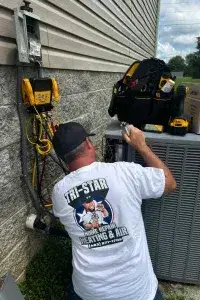
A technician in a white shirt works on an outdoor air conditioning unit.

When it comes to repairing air conditioning issues, employing expert techniques is crucial for effective solutions. Professional HVAC technicians utilize a variety of methods to diagnose and fix problems efficiently.

  1. System Cleaning: Regular cleaning of the evaporator and condenser coils ensures optimal heat exchange and efficiency.
  2. Component Inspection: Technicians thoroughly inspect components such as the compressor, fan, and electrical connections to identify any faults.
  3. Refrigerant Level Check: Maintaining the correct refrigerant level is essential for efficient cooling; technicians can recharge the system if necessary.

For those in need of professional assistance, Tri-Star Heating and Air specializes in troubleshooting and repairing common air conditioning issues in East Tennessee.

Effective Solutions for Maintenance

Homeowner changing air filters on an air conditioning unit, highlighting effective maintenance solutions

Preventive maintenance is key to avoiding costly repairs and ensuring your air conditioning system operates smoothly. Here are some effective maintenance solutions:

  1. Regular Maintenance: Schedule annual inspections to keep your system in top shape.
  2. Change Air Filters: Replace filters every 1-3 months to maintain airflow and efficiency.
  3. Monitor Energy Bills: Keep an eye on your energy bills; a sudden increase may indicate an underlying issue with your AC system.

Implementing these maintenance strategies can significantly extend the lifespan of your air conditioning unit.

Importance of Regular Maintenance

Regular maintenance is crucial for the longevity and efficiency of your air conditioning system. By investing in routine check-ups, you can enjoy several benefits:

  1. Improves Efficiency: A well-maintained system operates more efficiently, reducing energy consumption.
  2. Lowers Energy Bills: Efficient systems consume less energy, leading to lower utility costs.
  3. Extends Lifespan: Regular maintenance can prolong the life of your air conditioning unit, saving you money on premature replacements.

Tri-Star Heating and Air offers comprehensive maintenance services to help you keep your system running smoothly.

Emergency Repair Considerations

Certain air conditioning issues require immediate attention to prevent further damage. Here are some common emergency repair considerations:

  1. Refrigerant Leaks: These can pose health risks and should be addressed immediately.
  2. Compressor Failures: A malfunctioning compressor can lead to complete system failure.
  3. Electrical Malfunctions: Issues with wiring or components can create safety hazards and should be handled by professionals.

If you encounter any of these problems, it is advisable to contact a qualified HVAC technician promptly.

Why Is My AC Not Cooling Properly? Identifying Common Cooling Problems

When your air conditioning system fails to cool effectively, it can be frustrating. Understanding the common causes can help you troubleshoot the issue.

Common Cooling Problems

Several factors can contribute to inadequate cooling in your air conditioning system:

  • Warm Air Blowing: This may indicate a refrigerant leak or a malfunctioning compressor.
  • Weak Airflow: Blocked ducts or dirty filters can restrict airflow, leading to insufficient cooling.

General Troubleshooting Steps

If your AC is not cooling properly, consider these troubleshooting steps:

  1. Check the Thermostat: Ensure it is set to the desired temperature and functioning correctly.
  2. Inspect Air Filters: Dirty filters can impede airflow; replace them if necessary.

When to Call a Professional

If basic troubleshooting does not resolve the issue, it may be time to call a professional. Look for these indicators:

  • Visible Leaks: Any signs of refrigerant leaks should be addressed immediately.
  • Strange Noises: Unusual sounds can indicate mechanical issues that require expert attention.

How Do Compressor Problems Affect AC Cooling?

The compressor is a vital component of your air conditioning system, and any issues can significantly impact cooling performance.

A malfunctioning compressor can lead to warm air blowing from the vents, unusual noises, and frequent cycling of the system. If you suspect compressor problems, it is essential to consult a professional technician for diagnosis and repair.

How to Diagnose and Fix AC Compressor and Refrigerant Issues

Diagnosing compressor and refrigerant issues involves several steps:

  1. Identify Symptoms: Look for signs such as warm air or unusual noises.
  2. Check for Refrigerant Leaks: Inspect the system for any visible signs of leaks.

If you are unsure about the diagnosis, it is best to contact a professional HVAC technician for assistance.

What Are the Signs of Refrigerant Leaks?

Refrigerant leaks can severely impact your air conditioning system’s performance. Here are some signs to watch for:

  • Weakened Cooling Performance: If your AC is not cooling effectively, it may be low on refrigerant.
  • Hissing Noises: This sound can indicate a refrigerant leak in the system.

If you notice these signs, it is crucial to seek professional help immediately.

How Can Compressor Failures Be Troubleshot Effectively?

Troubleshooting compressor failures involves several steps:

  1. Identify Symptoms: Look for signs such as warm air or unusual noises.
  2. Check Electrical Connections: Ensure all connections are secure and functioning properly.

If these steps do not resolve the issue, it is advisable to contact a professional technician for further assistance.

What Are Common Thermostat and Electrical Troubleshooting Tips?

Thermostat and electrical issues can also lead to air conditioning failures. Here are some common troubleshooting tips:

  1. Check for Inaccurate Temperature Display: Ensure the thermostat is functioning correctly.
  2. Inspect for Power Interruptions: Verify that the system is receiving power and that there are no blown fuses.

If these troubleshooting steps do not resolve the issue, consider contacting a professional for assistance.

What Electrical Problems Cause AC Failures?

Electrical issues can significantly impact your air conditioning system’s performance. Common problems include:

  • Faulty Capacitors: These can prevent the compressor from starting.
  • Bad Control Board: A malfunctioning control board can disrupt the entire system.

If you suspect electrical issues, it is essential to consult a qualified technician for diagnosis and repair.

Why Is My AC Leaking Water and How Can I Resolve Drainage Issues?

Water leakage from your air conditioning system can indicate drainage issues. Common causes include:

  • Clogged Condensate Drain: This can lead to water buildup and leaks.
  • Frozen Coils: Ice formation can cause water to leak when it melts.

To resolve these issues, ensure the condensate drain is clear and check for any signs of ice on the coils.

What Causes AC Water Leakage?

Several factors can contribute to water leakage in your air conditioning system:

  • Clogged Condensate Drain Lines: This can prevent proper drainage and lead to leaks.
  • Frozen Coils: Ice buildup can cause water to leak when it melts.

If you notice water leakage, it is essential to address the issue promptly to prevent further damage.

When Should You Call Professional AC Repair Services?

Knowing when to seek professional help is crucial for maintaining your air conditioning system. Consider calling a professional if you notice:

  • Visible Leaks: Any signs of refrigerant or water leaks should be addressed immediately.
  • Strange Noises: Unusual sounds can indicate mechanical issues that require expert attention.

Tri-Star Heating and Air is available to assist with all your air conditioning repair needs in East Tennessee.