

By Scott Tinkham, Tri-Star Heating & Air
Maintaining your HVAC system is crucial for ensuring optimal performance and energy efficiency in your home. Many homeowners may feel overwhelmed by the thought of HVAC maintenance, but there are several simple tasks you can perform yourself to keep your system running smoothly. This guide will walk you through essential DIY HVAC maintenance tasks, helping you save money on professional services while enhancing your home’s comfort. By understanding these tasks, you can prevent costly repairs and extend the lifespan of your HVAC system. In this article, we will cover how often to replace your HVAC air filter, steps for cleaning AC coils, checking and adjusting thermostat settings, and simple furnace filter and blower maintenance tasks.
Replacing your HVAC air filter is a fundamental maintenance task that significantly impacts your system’s efficiency and air quality. Generally, it is recommended to replace filters every 1 to 3 months, depending on various factors. For instance, homes with pets may require more frequent changes, ideally every 4 to 6 weeks, to combat shedding and dander. Additionally, families with allergy sufferers should consider monthly replacements to maintain optimal air quality. Clogged filters can lead to reduced airflow, increased energy consumption, and even system breakdowns, making regular replacement essential for maintaining your HVAC system’s performance.
Tri-Star Heating and Air, a local HVAC service provider in East Tennessee, emphasizes the importance of regular air filter replacements to ensure your system operates efficiently. By staying on top of this simple task, you can enhance your home’s comfort and reduce energy costs.
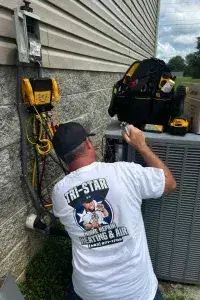
Cleaning your AC coils is vital for maintaining the efficiency of your HVAC system. Dirty coils can hinder heat exchange, leading to increased energy consumption and reduced cooling performance. To clean AC coils safely, follow these steps:
Considering the challenges of manual coil cleaning, research is exploring innovative solutions to streamline this essential maintenance.
Automated AC Coil Cleaning for HVAC Efficiency
1. Ceiling cassette air-conditioning units play a pivotal role in the HVAC industry, renowned for their high efficiency, especially in high-rise buildings. However, the routine maintenance of these units poses significant challenges. The current methods are labor-intensive, time-consuming, and wasteful of water, leading to adverse effects on workers’ health due to chemical exposure and the physical strain of manual cleaning. In response, this research proposes an innovative solution leveraging Arduino, high-pressure water nozzles, and electronic components to revolutionize maintenance procedures. By automating cleaning processes, this system aims to reduce both the time required for servicing and the physical exertion demanded from workers while also minimizing water wastage and eliminating exposure to harmful chemicals.
Smart Automated Evaporator Coil Cleaning System for Ceiling-Mounted Air Conditioning Units, ST Ambujam, 2025
Coil cleaning is essential for several reasons. First, clean coils improve energy efficiency by allowing the system to operate at optimal levels. When coils are dirty, the system has to work harder to cool your home, leading to increased energy bills. Additionally, regular cleaning helps prevent corrosion and extends the lifespan of your HVAC system. By maintaining clean coils, you ensure effective heat exchange, which is crucial for both cooling and heating functions.
To clean your AC coils effectively, you will need the following tools and materials:
Having these tools on hand will make the cleaning process more efficient and ensure you can perform the task safely.

Checking and adjusting your thermostat settings is a straightforward yet crucial maintenance task that can significantly impact your HVAC system’s efficiency. Proper thermostat settings ensure that your home remains comfortable while minimizing energy consumption.
Calibrating your thermostat is essential for accurate temperature readings. To calibrate, use a separate thermometer to compare the temperature reading on your thermostat. If there is a discrepancy, consult your thermostat’s manual for calibration instructions. Proper calibration ensures that your HVAC system operates efficiently, providing consistent comfort throughout your home.
Common thermostat issues include unresponsive settings, incorrect temperature readings, and connectivity problems with smart thermostats. To reset your thermostat, turn it off and remove the batteries (if applicable) for a few minutes before reinserting them. This simple reset can often resolve minor issues and restore proper functionality.
Maintaining your furnace filter and blower is essential for ensuring efficient operation and prolonging the life of your HVAC system. Regular maintenance tasks include replacing filters and inspecting the blower for any signs of wear or damage.
Replacing your furnace filter is a straightforward task that can significantly impact airflow and system efficiency. Follow these steps:
Regularly inspecting and cleaning the furnace blower is crucial for maintaining airflow and efficiency. It is recommended to inspect the blower at least once a year, ideally before the heating season begins. Look for dust buildup and clean the blower blades with a soft brush or vacuum. If you notice any unusual noises or reduced airflow, it may be time to call a professional for further inspection.
Different maintenance tasks deliver distinct benefits through specific mechanisms.
| Task | Frequency | Benefit |
|---|---|---|
| Replace Air Filter | Every 1-3 months | Improved airflow and energy efficiency |
| Clean AC Coils | Annually | Enhanced cooling performance and energy savings |
| Inspect Thermostat | Monthly | Accurate temperature control and comfort |
| Replace Furnace Filter | Every 1-3 months | Maintains airflow and system efficiency |
This table highlights the importance of regular maintenance tasks and their impact on your HVAC system’s performance. By staying proactive with these tasks, you can ensure a comfortable and efficient home environment.